
Provide your personal information, a description of your disability and how it affects your ability to work.

Navigating the process
Think of the disability claims process as a series of steps assisting in your journey to recovery. This section is designed to create confidence through transparency in the process and simplifying steps needed to submit a claim.
Initiating a claim
Several parties play key roles in getting your disability claim started, each providing important information to keep the process moving smoothly.
The disability claims process
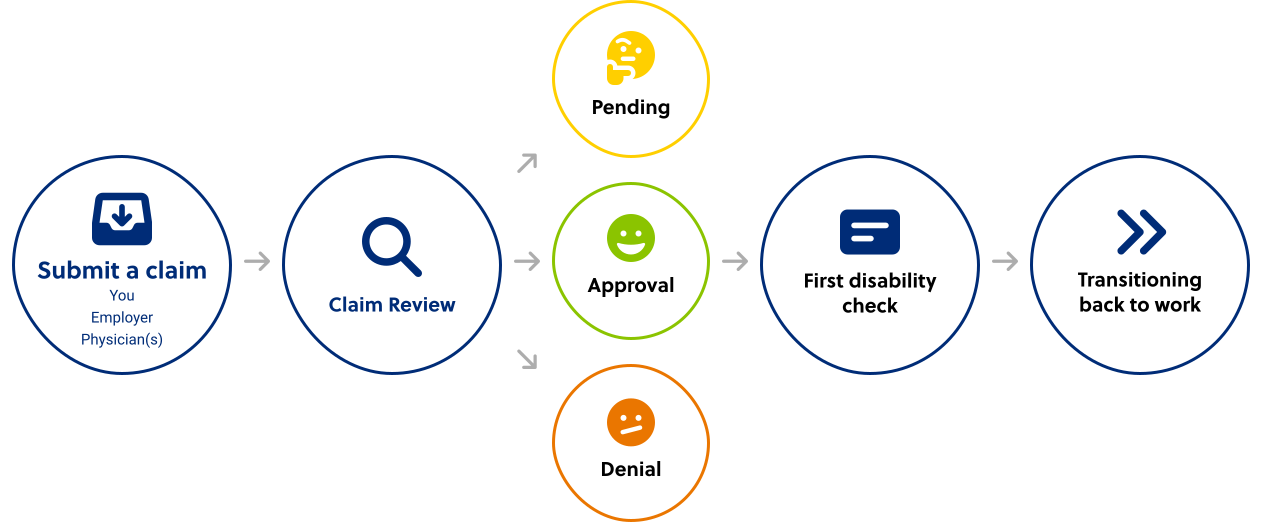
This process is designed to gather the information needed to understand how your condition affects your ability to work. Click on the steps to see explanations of the key parts of the process so you know what to expect along the way.
Submit your claim
Your disability claim can be started by you, your employer or a family member if you are unable to do so. Your physician must complete the required form and medical information.
Your claim form will likely outline the key documents/information needed. Your claim is considered complete once all required information is received. Submitting all the key documents at the same time will help to avoid delays.
Claim review
After all paperwork is received, your insurance carrier will often reach out and confirm your information. They will also answer any questions you may have. Your claim will be reviewed by a team of experts. Short-term disability claim decisions are usually reviewed within approximately three business days. Long- term disability claims are typically reviewed within ten days. Keep in mind, time frames may vary. Staying in contact with your claim team and providing requested information can help avoid delays.
Pending
A decision to pend your claim means the examiner needs more information before making a decision. Your claim examiner will call you to explain what’s missing and discuss next steps.
Approval
If your claim is approved, you’ll receive a written decision explaining your benefits, including information on your benefit amount and the exact date your payments will start. After that, payments begin either through direct deposit or by check.
Denial
If your claim is not payable, you will receive a written notice of the denial decision which will include your rights to appeal. Your claims examiner will also contact you directly to explain the decision and any next steps.
First disability check
The timing of your first disability check is defined by your policy and your employer’s processes. Your benefit payment may be a percentage of your salary or a flat amount. Some payments are weekly while others are monthly. Benefits begin after you’ve completed your elimination period.
Transitioning back to work
Ongoing communication with your insurance company will be needed, especially if you’re away from work longer than expected. The claims team may request additional medical information to better understand how your condition affects your ability to return to work. Support is also available to help you plan a safe and successful return, including guidance and resources tailored to your situation.
People helping people
Several people may take part in a disability claim, each with a specific role in gathering information, reviewing details, and keeping the process moving. Knowing who is part of your community of care and what they do helps make the steps easier to follow, especially for someone new to disability insurance.
Intake specialist
When your disability claim is first received, an intake specialist will help you understand the process, answer your questions and prepare your claim application for review.
Clinical care manager
This licensed doctor or nurse will work with your claims examiner to review your medical information and support a full understanding of your health and recovery needs.
Benefit assistant
As your claim application is processed, a benefit assistant may reach out to you, your employer and/or your doctor for more information to help keep everything on track.

Social Security advocate
If your recovery or return to work is delayed, your claims examiner may discuss the advantages of SSDI and refer you to a representative who can guide you through the application process.
Claim examiner
Once your application is complete, a claims examiner becomes your main contact. They’ll discuss your condition, treatment, daily activities, and return‑to‑work plans, and may reach out to your doctor or workplace for added details.
Vocational consultant
Whether returning to your job, finding a new role, or retraining, this professional helps you identify your strengths and explore options so you have the support to get back to work.
Have OneAmerica Financial short- or long-term disability protection through your employer and need to file a claim?
Access our online claims page.
OneAmerica Financial® is the marketing name for the companies of OneAmerica Financial. Products issued and underwritten by American United Life Insurance Company® (AUL), Indianapolis, IN, a OneAmerica Financial company.