Know before you need.

When you’re facing a major life change—whether you’re planning for pregnancy or managing an unexpected health condition—the last thing you need is added uncertainty.

Disability insurance may be available more often than you might realize. Whether you're planning for the arrival of a new baby, have a scheduled medical procedure or find yourself facing an unexpected illness or injury, these benefits help replace part of your income when a covered condition prevents you from working.

Understanding disability insurance basics

What is disability?

A disability is typically defined by your insurance carrier as a physical or mental condition, caused by illness or injury, which keeps a person from doing the main duties of their job. You'll want to check out the definition of disability in your policy. If the definition is confusing, ask your benefits department, call your insurance company or speak to your agent or financial professional.


Most people who have disability insurance are offered these benefits through their employer. Employer plans, or “group disability insurance” may provide short-term disability coverage and/or long-term disability coverage.


There are two types of group disability insurance, each based on the length of your injury or illness:

Comparing group disability insurance protection

Below is a quick comparison between typical group short‑term disability and long‑term disability insurance plans. Benefit plans vary greatly, so be sure to refer to your own policy.

 Short-term disability (STD) insuranceLong-term disability (LTD) insurance
When coverage starts
(after Elimination period)
1-30 days after you’re unable to work90-180 days after you’re unable to work
How long your benefit can last
(Benefit period)

Injury or illness: 90-180 days

Maternity

  • Six weeks (standard delivery)
  • Eight weeks (C-section)


At change of definition (between 1-5 years based upon change of definition, policy limitations (e.g., maximum duration, special conditions) or at normal retirement age (based upon age at time of disability)
Your benefit amount60-80% of pre-disability income60-80% of pre-disability income; Other income benefits may reduce the benefit such as salary continuation, state disability, social security disability, etc.
Payment frequencyWeeklyMonthly
Proof of disabilityRequires medical evidence certifying that you are unable to perform your job duties due to the disability.Requires medical evidence certifying that you are unable to perform your job duties due to the disability.
Disability insurance graphic

What does disability insurance cover?

Illness, injury or a known condition like pregnancy can make you unable to work, and these situations can happen to anyone. Understanding the kinds of health conditions that are most commonly covered gives you a clearer idea of how disability insurance may protect you in the future.

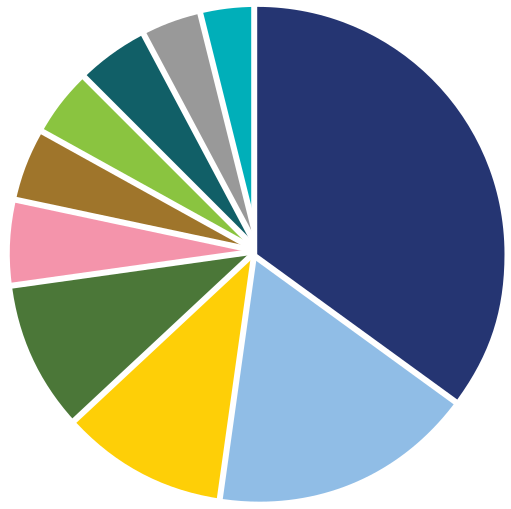
Leading causes of disability claims

Based on data from the Social Security Administration, the conditions below represent the most common reasons people receive disability benefits. These percentages reflect illness‑related disabilities and do not include pregnancy‑ or injury-related claims.

disability-chart
 30.5%Musculoskeletal Systems & Connective Tissue
 14.9%Mood disorders
 9.3%Nervous system & sense organs
 8.3%Circulatory systems
 4.8%Schizophrenic & other psychotic disorders
 4.1%Intellectual disability
 4.0%Injuries
 3.9%Other mental disorders
 3.4%Organic mental disorders
 3.3%Endocrine disorders

Annual Statistical Report on the Social Security Disability Insurance Program, 2024
(released December 2025); https://www.ssa.gov/policy/docs/statcomps/di_asr/#:~:text=Awards%20to%20disabled%20workers%20(594%2C749,/about/glossary.html.

Other types of benefit considerations

The federal government and many states provide different types of financial protection in the event you are unable to work due to injury or illness. While helpful, they each have limits. This is not an exhaustive list of benefits available. Review your policy and consult your employer or insurance carrier for specific details.

  • Family and Medical Leave Act (FMLA)

    FMLA is a federal program that allows eligible employees to take up to 12 weeks of unpaid, job-protected leave in a 12-month period for certain family and medical reasons. In some situations, employees can take FMLA leave intermittently. Your employer can explain how FMLA leave works at your company and how it applies to your specific disability and benefits. You can also find more information more about FMLA on the Department of Labor website.

  • State Paid Family Leave (PFML)

    Some states offer paid family and medical leave programs that provide partial wage replacement when workers need time off for major life events, such as caring for a new child, supporting a seriously ill family member or managing their own health condition. These programs operate separately from federal FMLA, which guarantees job protection but does not include pay. Eligibility, benefit amounts and leave duration vary by state.

  • State Disability insurance (SDI)

    SDI is a state-based program that provides short-term disability benefits to workers who can’t work due to a nonwork-related injury, sickness or medical condition. Sometimes called temporary disability insurance (TDI), these programs are funded by payroll taxes, which may be paid by the employee, employer or both. SDI programs are only offered in certain states  , and each state has its own rules regarding who qualifies and what benefits are available.

  • Workers’ compensation

    Workers’ Compensation is a state-required insurance program designed to support employees who are injured or become ill because of their job. It helps cover medical care, rehabilitation and a portion of lost wages while you recover. Your employer pays for this coverage. Workers’ compensation benefits generally are not taxable when they’re paid for a work-related injury or illness.

  • Social Security Disability Insurance

    The also offers disability insurance. SSDI is a federal program designed for people who have worked long enough to qualify for benefits. If approved, you’ll receive monthly cash payments and Medicare based on your earning record on file with the Social Security Administration.

Have OneAmerica Financial short- or long-term disability protection through your employer and need to file a claim? 

Access our online claims page: